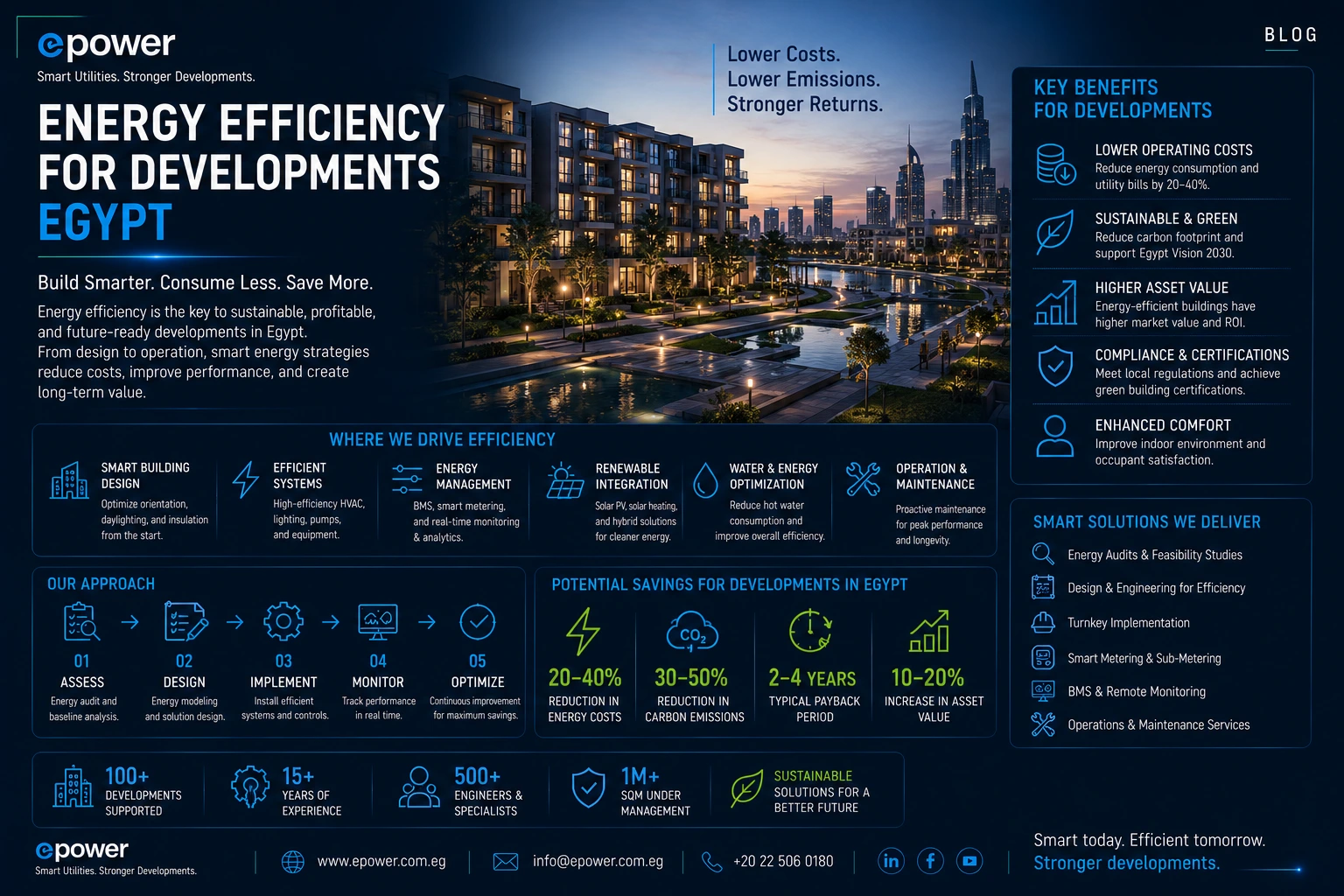
Energy efficiency has become a strategic priority for real estate developers in Egypt as residential communities, commercial destinations, industrial facilities, hotels, and mixed-use developments become larger and more energy-intensive. Designing buildings and infrastructure to consume energy efficiently can reduce operating costs, improve occupant comfort, and increase the long-term value of a development.
Energy Efficiency for Developments Egypt involves more than installing efficient equipment. It requires an integrated approach that combines building design, electrical infrastructure, HVAC systems, smart metering, energy management, renewable energy, and continuous monitoring.
Research referenced by the World Bank indicates that green buildings in Egypt can reduce energy consumption by approximately 24% to 50%, demonstrating the potential impact of energy-efficient design and operation.
What is Energy Efficiency for Developments?
Definition
Energy Efficiency for Developments Egypt refers to the strategies, technologies, engineering solutions, and operational practices used to reduce energy consumption while maintaining the required level of performance, comfort, safety, and functionality.
For a real estate development, this can include:
- Efficient electrical infrastructure
- High-performance HVAC systems
- Smart lighting
- Building automation
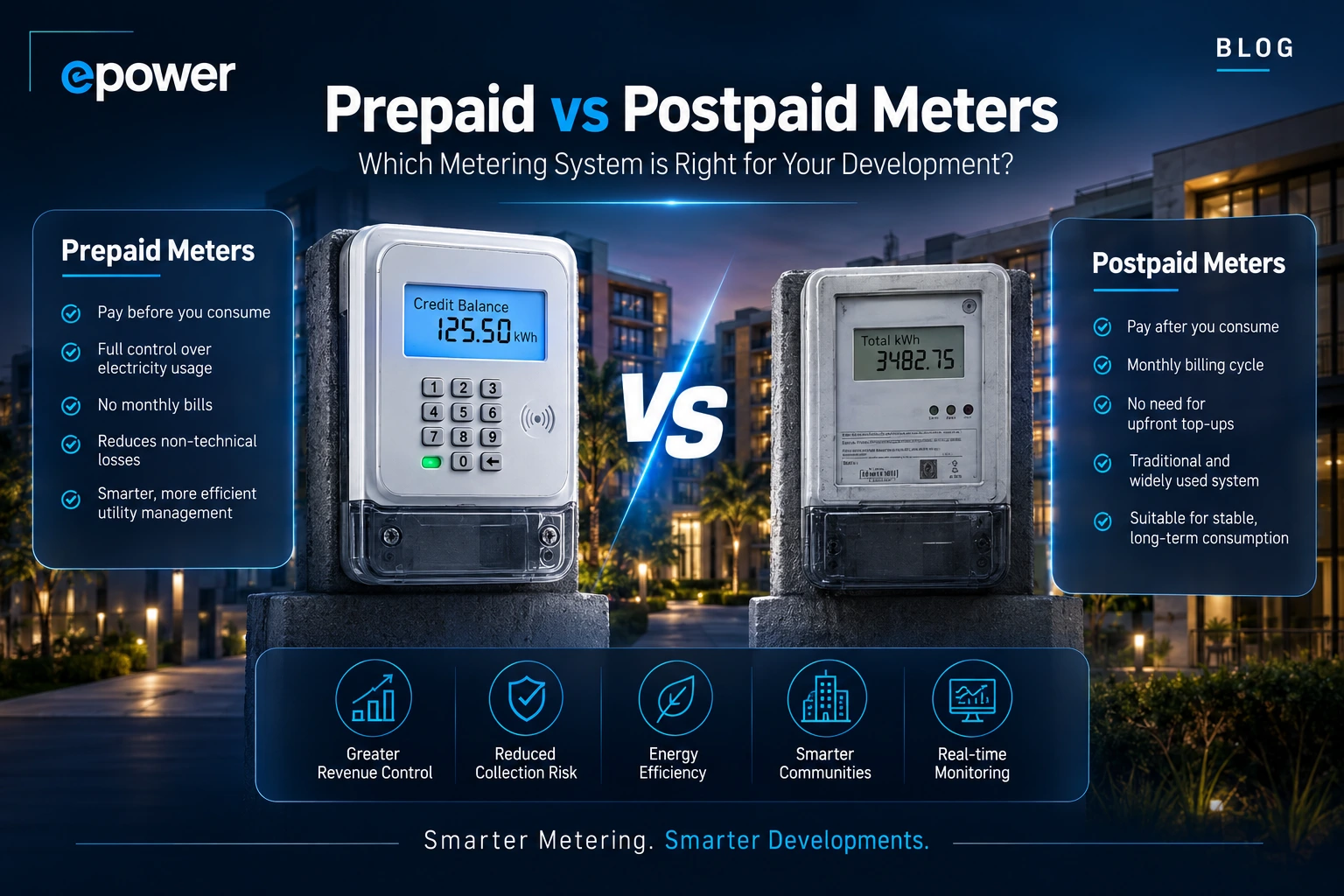
- Smart metering
- Energy monitoring
- Efficient pumps and motors
- Renewable energy integration
- Energy-efficient building envelopes
- Preventive and predictive maintenance
The objective is not simply to use less electricity. It is to deliver the same or better level of service using energy more intelligently.
Why Energy Efficiency Matters for Egyptian Developments
Rising Operational Costs
Energy is a major recurring expense for developments containing air conditioning, lighting, pumps, elevators, water systems, commercial facilities, and common areas.
Reducing unnecessary consumption can directly improve operating economics.
Hot Climate Conditions
Egypt's climate creates significant cooling requirements, particularly during the summer. HVAC systems can therefore become one of the most important areas for energy optimization.
Growing Development Scale
Large compounds and mixed-use projects may contain hundreds or thousands of residential units alongside retail, hospitality, offices, clubs, and infrastructure.
Managing energy efficiently across all these assets requires centralized monitoring and intelligent control.
Sustainability Requirements
Energy efficiency also supports broader environmental objectives. Egypt's environmental authorities continue to promote green transformation and renewable energy initiatives, including current programs supporting solar systems and improved cooling and air-conditioning efficiency.
Key Energy Efficiency Solutions for Developments
Efficient Electrical Infrastructure
Electrical infrastructure should be designed to minimize unnecessary losses and operate efficiently under expected load conditions.
This includes:
Transformer Optimization
Correct transformer sizing and efficient equipment selection can reduce losses while improving network performance.
Power Factor Correction
Poor power factor can increase current demand and contribute to inefficient electrical operation. Appropriate correction systems can improve electrical performance.
Load Balancing
Monitoring electrical loads across phases helps reduce imbalance and improve distribution network efficiency.
Efficient Distribution
Proper cable sizing, voltage management, and distribution design help minimize electrical losses throughout the development.
HVAC Energy Efficiency
Optimize Cooling Systems
Because cooling requirements can be substantial in Egypt, HVAC optimization should be a central component of any energy efficiency strategy.
Solutions can include:
- High-efficiency chillers
- Variable-speed drives
- Efficient pumps
- Optimized air-handling units
- Smart thermostats
- Variable air volume systems
- Regular coil and filter cleaning
- Chiller performance monitoring
District Cooling
For large developments, district cooling can provide a centralized alternative to individual cooling systems.
Centralized cooling plants can optimize cooling production across multiple buildings and reduce the need for duplicated equipment.
This can be particularly relevant for:
- Mixed-use developments
- Large residential compounds
- Business districts
- Hotels
- Shopping malls
- Smart cities
Smart Energy Management Systems
Building Management Systems
Building Management Systems (BMS) allow operators to monitor and control building systems from a centralized platform.
Depending on the installation, a BMS can monitor:
- HVAC
- Lighting
- Electrical systems
- Pumps
- Temperature
- Occupancy
- Energy consumption
Automated control allows equipment operation to respond more closely to actual demand.
Energy Management Systems
An Energy Management System (EMS) provides deeper analysis of energy consumption and performance.
It can help identify:
- High-consumption buildings
- Abnormal energy usage
- Peak demand
- Inefficient equipment
- Energy-saving opportunities
Smart Metering for Energy Efficiency
Real-Time Consumption Monitoring
Smart meters provide detailed information about energy consumption across buildings, tenants, common areas, and infrastructure.
This allows facility teams to compare actual consumption against expected performance.
Detecting Abnormal Consumption
Unexpected increases in energy consumption may indicate:
- Equipment malfunction
- HVAC inefficiency
- Electrical faults
- Incorrect operating schedules
- Unauthorized consumption
Early identification allows corrective action before energy waste becomes significant.
Tenant-Level Energy Management
Commercial and mixed-use developments can use smart metering to measure individual tenant consumption.
This improves transparency and creates accountability for energy use.
Energy-Efficient Lighting
LED Lighting
Replacing inefficient lighting systems with LED technology can significantly reduce electricity consumption and maintenance requirements.
LED systems can be combined with:
- Occupancy sensors
- Daylight sensors
- Timers
- Dimming controls
- Smart lighting systems
Common Areas
Energy-efficient lighting is particularly valuable in:
- Parking areas
- Corridors
- Lobbies
- Streets
- Landscaping
- Retail areas
- Public spaces
Building Envelope and Passive Design
Reduce Heat Gain
The building envelope plays an important role in reducing cooling requirements.
Energy-efficient design can include:
- Appropriate insulation
- High-performance glazing
- External shading
- Reflective roofing
- Reduced air leakage
- Optimized building orientation
These measures can reduce the amount of cooling energy required to maintain indoor comfort.
Passive Design Strategies
The World Bank's building energy-efficiency research highlights climate-specific passive design strategies as important low-cost or no-cost measures for improving building performance.
For Egypt, this makes the relationship between architectural design, solar exposure, ventilation, insulation, and HVAC demand particularly important.
Renewable Energy Integration
Solar PV Systems
Solar photovoltaic systems can provide renewable electricity for:
- Common areas
- Lighting
- Water pumps
- Administrative buildings
- Parking facilities
- Selected residential infrastructure
Egypt's current environmental initiatives include support for solar energy systems as part of broader green transformation efforts.
Solar + Smart Energy Management
Combining solar PV with smart metering and energy management provides better visibility into:
- Solar generation
- Building consumption
- Grid electricity
- Peak demand
- Renewable energy utilization
Energy-Efficient Water and Pumping Systems
Energy efficiency is not limited to electricity-consuming building equipment.
Water infrastructure can also generate significant energy demand through:
- Booster pumps
- Transfer pumps
- Irrigation systems
- Sewage pumps
- Cooling systems
Variable Speed Drives
Variable Speed Drives (VSDs) allow pump motors to operate according to actual demand rather than running continuously at full speed.
Smart Pump Control
Automated controls can coordinate pump operation with pressure, flow, water demand, and storage levels.
Energy Efficiency Through Preventive Maintenance
Maintain Equipment Performance
Poorly maintained equipment often consumes more energy than properly maintained equipment.
Maintenance programs should cover:
- HVAC filters
- Coils
- Motors
- Pumps
- Electrical connections
- Transformers
- Lighting systems
- Control systems
Predictive Maintenance
Sensors and monitoring platforms can identify changes in equipment performance before they develop into major failures.
This improves both energy efficiency and asset reliability.
Energy Audits for Existing Developments
What is an Energy Audit?
An energy audit evaluates how a development consumes energy and identifies opportunities for improvement.
A professional audit can examine:
- Electricity bills
- HVAC performance
- Lighting
- Electrical distribution
- Pumps
- Building envelope
- Operating schedules
- Utility consumption patterns
Energy Audit Process
Step 1: Collect Data
Gather utility bills, meter data, equipment information, and operating schedules.
Step 2: Identify Major Consumers
Determine which systems and buildings account for the largest share of energy consumption.
Step 3: Identify Inefficiencies
Analyze equipment performance and operating patterns to identify energy waste.
Step 4: Develop Recommendations
Prioritize energy-saving measures based on expected savings, investment, technical feasibility, and payback.
Step 5: Measure Results
After implementation, compare actual energy performance with the original baseline.
Benefits of Energy Efficiency for Developments Egypt
Lower Operating Costs
Reducing unnecessary energy consumption directly lowers utility expenses.
Improved Asset Performance
Efficient equipment operates under better conditions and can benefit from improved maintenance and operational control.
Greater Occupant Comfort
Energy efficiency does not mean sacrificing comfort. Properly designed systems can maintain indoor conditions while consuming less energy.
Increased Property Value
Energy-efficient developments can become more attractive to investors, tenants, buyers, and businesses looking for lower operating costs and sustainable properties.
Reduced Environmental Impact
Lower energy consumption can reduce associated greenhouse gas emissions, particularly where electricity generation relies on fossil fuels.
Better Energy Visibility
Smart monitoring allows developers and facility managers to understand where energy is being consumed and where improvements can be made.
Energy Efficiency Across Different Development Types
Residential Compounds
Energy efficiency strategies can focus on:
- Common-area lighting
- Water pumps
- Smart meters
- HVAC
- Solar systems
- Street lighting
Commercial Developments
Office and retail projects can benefit from:
- BMS
- Efficient HVAC
- Smart lighting
- Tenant metering
- Energy analytics
Shopping Malls
Major opportunities often exist in:
- Chillers
- Air handling
- Lighting
- Escalators
- Pumps
- Building automation
Hotels and Resorts
Hospitality properties can optimize:
- HVAC
- Hot water
- Kitchens
- Lighting
- Swimming pools
- Laundry systems
- Water pumping
Industrial Facilities
Industrial projects may prioritize:
- Motors
- Transformers
- Power factor
- Compressed air
- Process equipment
- Electrical distribution
How to Build an Energy Efficiency Strategy
Start With Measurement
You cannot effectively manage what you cannot measure. Smart meters and centralized monitoring should establish a reliable energy baseline.
Prioritize High-Impact Systems
Focus first on systems responsible for the largest share of energy consumption, particularly HVAC, cooling, pumps, and lighting.
Combine Design and Operations
Energy efficiency should begin during project design but continue throughout the operational lifecycle.
Set Performance KPIs
Useful KPIs include:
- kWh per square meter
- Peak demand
- HVAC efficiency
- Energy cost per building
- Water consumption
- Renewable energy contribution
- Energy savings percentage
Continuously Optimize
Energy efficiency is an ongoing process. Performance should be measured regularly and compared against established baselines.
Why Choose epower?
epower provides integrated Energy Efficiency for Developments Egypt solutions designed to help developers and facility operators reduce energy consumption, improve infrastructure performance, and control long-term operating costs.
The company's solutions can combine electrical infrastructure optimization, smart metering, utility management, energy monitoring, HVAC optimization, preventive maintenance, and renewable energy integration.
By connecting engineering expertise with digital monitoring and operational management, epower helps residential, commercial, industrial, hospitality, and mixed-use developments identify energy-saving opportunities and implement practical strategies that improve performance throughout the asset lifecycle.
Conclusion
Energy Efficiency for Developments Egypt is no longer simply an environmental objective. It is a practical strategy for reducing operating costs, improving asset performance, increasing property competitiveness, and creating more sustainable developments.
The most effective approach combines efficient infrastructure, smart metering, HVAC optimization, energy management systems, renewable energy, efficient lighting, water optimization, and proactive maintenance.
For Egyptian developments, the opportunity is particularly significant because cooling and electricity demand can represent substantial operating costs. Evidence from Egypt's green-building programs demonstrates that well-designed energy-efficient buildings can achieve meaningful reductions in consumption.
By measuring energy performance, identifying the largest sources of consumption, and continuously optimizing building systems, developers can create efficient, resilient, and future-ready properties.
Frequently Asked Questions
What is energy efficiency for developments?
Energy efficiency for developments involves reducing unnecessary energy consumption while maintaining the required comfort, safety, and operational performance of residential, commercial, industrial, hospitality, and mixed-use properties.
Why is energy efficiency important in Egypt?
Egypt's climate creates substantial cooling demand, while large developments operate many energy-intensive systems. Improving efficiency can therefore reduce utility costs and improve long-term property performance.
Which systems consume the most energy in developments?
HVAC and cooling systems are often major energy consumers, followed by lighting, pumps, electrical equipment, elevators, and other building services. Actual consumption varies by building type and operating profile.
How can smart metering improve energy efficiency?
Smart meters provide detailed consumption data that helps facility managers identify abnormal usage, monitor peak demand, compare buildings, and measure the impact of energy-saving initiatives.
Can solar energy improve development energy efficiency?
Solar PV can reduce reliance on grid electricity by generating renewable electricity for selected loads. Its effectiveness depends on system design, available space, electricity demand, and operating conditions.
How much energy can an energy-efficient building save in Egypt?
Savings vary significantly according to the building design, baseline performance, systems, and implemented measures. Research cited by the World Bank indicates green buildings in Egypt can reduce energy consumption by approximately 24% to 50%.
Why choose epower for energy efficiency solutions?
epower combines electrical engineering, smart metering, utility management, energy monitoring, HVAC optimization, and preventive maintenance to help developments across Egypt reduce energy consumption and improve long-term operational efficiency.